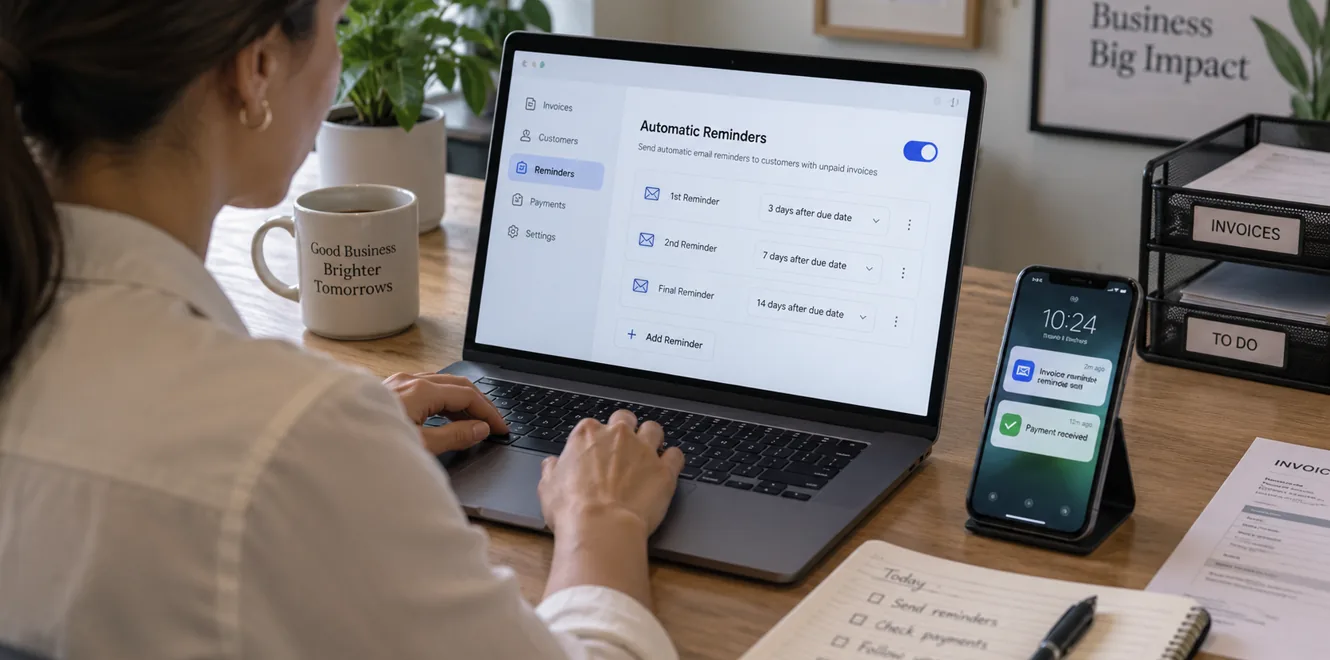
The collection automation approach most likely to reduce DSO quickly combines prompt invoice delivery, scheduled reminders, convenient digital payment options, accurate accounting integrations, and clear escalation rules. Rather than waiting until an invoice is seriously overdue, the process starts when the invoice is issued and keeps follow-up moving according to its due date and customer payment history.
That approach matters for agencies, law firms, IT consultants, accounting practices, software companies, and other businesses with lean finance teams. Slow collections tie cash up in accounts receivable and force employees to spend time checking aging reports, writing reminders, and figuring out which customers need another call.
Which collection automation approach most quickly reduces DSO? For businesses focused on DSO reduction, the goal is straightforward: remove avoidable delays between issuing an invoice and receiving cash while reserving human attention for accounts that genuinely need it.
.png)
Use Collections Automation before an Invoice Becomes Overdue to Reduce DSO
A common collections mistake is treating the due date as the starting point. By then, the business may already have lost valuable time.
Effective collections automation begins when an invoice is created. The customer receives the invoice promptly, payment instructions are clear, and reminders are scheduled before and after the due date. If the customer pays, the workflow should recognize that change and stop unnecessary outreach.
This process helps reduce DSO because it addresses small delays before they turn into aging balances. An invoice can't be paid quickly if it sits unsent for three days, reaches an outdated billing contact, lacks a purchase order number, or provides payment instructions that require additional emails.
A practical automated collections workflow should:
- Deliver accurate invoices promptly to the correct billing contact.
- Schedule reminders before and after the due date.
- Include direct payment links wherever possible.
- Adjust follow-up based on customer behavior or account status.
- Recognize posted payments and stop further collection messages.
- Escalate unresolved accounts to the appropriate employee.
- Record collection activity so staff can see what has already happened.
Timing also matters. A reliable customer may only need a friendly reminder shortly before the invoice is due. A customer with a repeated history of late payments may benefit from earlier communication and a quicker escalation path.
That doesn't mean treating dependable customers and chronic late payers aggressively. It means using available payment history to make collection activity appropriate to the account.
InvoiceSherpa allows businesses to create customizable reminder workflows and send communications when an invoice is created, when a due date approaches, after an invoice becomes past due, and after payment is received. Automating routine collections turns follow-up into an ongoing process instead of a weekly administrative project.
Streamline Your Accounts Receivable Processes
Automation software can't compensate for a poorly managed billing process. If invoice information is inaccurate or internal ownership is unclear, sending automated messages faster may simply expose those problems to customers.
Accounts receivable processes should support fast, accurate movement from completed work to invoice delivery, collection, and payment posting.
Start before the invoice is issued. Confirm the customer's billing contact, payment terms, purchase order requirements, invoice format, and accepted payment methods. A sales representative may have a strong client relationship, but that doesn't mean the invoice belongs in that person's inbox. Sending it directly to accounts payable or the designated billing contact can eliminate unnecessary routing time.
Invoice accuracy matters for the same reason. Pricing discrepancies, missing documentation, incorrect tax information, incomplete purchase order details, and unclear descriptions can stop payment even when the customer intends to pay on time.
Once an invoice is ready, send it without unnecessary delay. If your terms are net 30 but the invoice waits five days before being delivered, cash effectively arrives five days later even when the customer pays according to terms.
A disciplined process can be organized around the following stages:
InvoiceSherpa connects with accounting platforms including QuickBooks Online, Xero, and Clio and synchronizes invoice and customer data. Its integrated payment functions can also post collected payments directly to the corresponding invoice in the connected accounting software.
That synchronization helps collection workflows operate from current account information. If a payment is recorded but the collection system isn't updated, a customer could otherwise receive an unnecessary reminder.
Reducing DSO requires the billing, collection, payment, and accounting records to work as one process rather than separate administrative tasks.
Remove Payment Friction
A reminder can't produce faster payment if the customer still has difficulty figuring out how to pay.
Some collection delays happen because customers forget an invoice. Others occur because the payment process requires too many steps. A client may need to locate bank details, request a new invoice copy, call your office about card payments, or find an employee who can explain an unfamiliar portal. Digital payment options reduce those barriers.
InvoiceSherpa allows eligible customers to pay through credit card or ACH directly from invoice reminders and provides a customer portal where customers can view invoices, make payments, and manage available payment arrangements.
In some cases, automatic payments can remove another part of the collection cycle. When authorized and appropriate for the customer relationship, recurring or scheduled payments can help prevent routine invoices from entering the overdue queue in the first place.
The payment experience should answer four questions immediately:
- What is owed? Show the correct invoice balance.
- When is it due? Display a clear due date rather than requiring the customer to calculate it.
- How can it be paid? Make available payment methods obvious.
- Who can resolve a problem? Provide a recognizable contact or reply path for billing questions.
Making payment easier is particularly useful for small finance teams. Every customer who can independently view an invoice, understand the balance, and submit payment represents one less routine interaction for staff.
It also supports customer relationships. Collections become less dependent on uncomfortable phone calls when normal invoices can move through a predictable digital process.
For customers who can't use your preferred online payment method, maintain a reasonable alternative. The goal isn't to force every account through the same channel. It's to remove unnecessary obstacles from whichever approved payment process applies.
When improving DSO, consider payment friction alongside reminder frequency. Sending six reminders won't solve a payment problem caused by unclear instructions or a missing payment option.
Implement Customer Segmentation
Not every account should follow exactly the same collection path. Customer segmentation makes automation more useful by connecting follow-up to payment behavior, account value, contractual terms, or the current situation.
A long-standing customer with a strong payment history may need little intervention. A repeat late payer may need reminders earlier in the cycle. A large strategic account may require a named account manager to become involved before normal escalation begins. Exceptions also need clear handling.
Route an account to human review when a customer has raised a dispute, requested a payment plan, questioned pricing, reported a service problem, made a partial payment, or promised a payment that hasn't arrived. Missing purchase orders and duplicate billing concerns may also require investigation before another automated collection message is appropriate.
Consider a customer who disputes an invoice on Monday and receives an automated overdue notice on Tuesday that ignores the conversation. The collection workflow has technically operated as configured, but the customer experience has suffered. A stronger system should allow staff to pause, change, or redirect the sequence while the issue is resolved.
Once the dispute has been addressed, document the result. If the invoice was wrong, correct it quickly. If supporting documentation was missing, attach it. If the customer misunderstood the agreed price, make sure the account record reflects the discussion. That information can improve future collections. Repeated disputes for the same reason may reveal an upstream billing problem rather than a customer payment problem.
Receivable automation should therefore handle predictable activity while employees handle circumstances requiring context. InvoiceSherpa's reminder workflows, payment tracking, and accounts receivable dashboard are designed to give teams visibility into outstanding invoices without requiring them to manage every reminder manually.
Measure DSO Reduction Instead of Counting Collection Activity
Sending reminders is an activity. Improving DSO is an outcome.
Days Sales Outstanding measures how long, on average, billed revenue remains in accounts receivable before being converted into cash. A lower DSO can indicate that customers are paying faster, but the number should be interpreted alongside payment terms, customer mix, invoice volume, disputes, and other business changes.
Track DSO consistently against your own historical baseline.
If DSO begins to fall after automation is introduced, look deeper to confirm why. Did more customers pay after pre-due reminders? Did digital payment links shorten payment time? Are fewer invoices entering older aging buckets? Have all payments been matched with the appropriate client in order to clear paid invoices?
Businesses with high DSO should also segment the data. Overall averages can hide meaningful patterns. One customer segment may pay quickly while another consistently runs 20 days past terms.
Review aging by customer, invoice type, payment terms, dispute status, and collection stage. That can reveal where improving DSO requires a process change rather than another reminder.
A payment that has arrived but remains unmatched can leave an invoice appearing open and distort the team's understanding of outstanding receivables. Accurate payment posting supports both reporting and customer communication.
Use those metrics to refine the process. Automation should become better targeted as you learn which messages, timing, payment options, and escalation rules produce faster payment.
Put Receivable Automation to Work with InvoiceSherpa
The fastest route to lower DSO is usually not a harsher collections policy. It's a smoother accounts receivable process. Send accurate invoices promptly. Make due dates clear. Contact customers before balances become seriously overdue. Provide convenient digital payment options. Keep payment status synchronized with accounting records. Route disputes and unusual accounts to people who can resolve them. Process automation makes those practices easier to maintain as invoice volume grows.
InvoiceSherpa brings customizable invoice reminders, automated email and SMS follow-up, integrated payments, automatic payments, customer portal access, accounting integrations, and an A/R dashboard into one platform. That gives businesses a way to maintain consistent collections without asking employees to chase every outstanding invoice manually.
When routine follow-up happens predictably, finance teams can focus on the customers and disputes that require judgment. Customers receive timely communication and easier payment options, while business leaders gain a clearer picture of outstanding cash.
For businesses trying to reduce DSO, that combination of automation, payment convenience, current account data, and human exception handling creates a practical path from invoices sent to payments received.
September 14, 2026