
Late legal payments usually start with small process problems. An invoice goes to the wrong contact. A due date isn't clear. A client has a billing question nobody answers quickly. A reminder doesn't go out until the balance is already weeks overdue.
For law firms, those delays create real pressure on cash flow and staff time. Attorneys and administrators shouldn't have to search through inboxes, spreadsheets, and accounting records each time an invoice needs attention.
Knowing how to reduce late legal payments starts with tightening the steps between client onboarding and collection. Set payment expectations early, send accurate invoices promptly, make payment easy, and follow up on a consistent schedule.
Accounts receivable automation can handle much of the repetitive work. InvoiceSherpa connects with accounting platforms such as QuickBooks Online, Xero, and Clio to help businesses automate payment reminders, track receivables, and give clients convenient ways to pay.
The result is a billing process that's easier for clients to follow and easier for the firm to manage.

Set Clear Payment Terms Before Work Begins
Late payments are easier to prevent when clients know exactly what the firm expects from the start.
Payment terms should appear in the engagement agreement and match the billing process used throughout the matter. State when invoices will be issued, when payment is due, which payment methods are accepted, and whether a retainer or deposit is required.
Avoid vague wording if the firm expects payment within a specific number of days. A clear due date gives the client and the billing team the same reference point.
Strong contractual terms can also address situations that often lead to payment disputes. The agreement may explain how additional work is approved, when expenses will appear on an invoice, whether the matter will use staged billing, and how overdue balances will be handled.
For business clients, confirm which legal entity is responsible for the bill and who actually processes invoices. The person working with the attorney may not be the person responsible for accounts payable.
Vetting clients early can also reduce exposure. Before taking on a large engagement or extending substantial credit, firms may choose to assess customers' creditworthiness and adjust payment arrangements accordingly.
Credit control shouldn't begin only after an invoice becomes overdue. Review outstanding receivables regularly and assign responsibility for follow-up.
A firm that checks aged accounts every week can spot repeated payment problems early. Waiting until a balance is 60 or 90 days old leaves fewer easy options for resolving it.
Send Accurate Invoices and Make Payment Easy
A client can't pay an invoice confidently if the amount, due date, or billing details are unclear.
Legal billing should make each charge easy to trace. Before an invoice goes out, confirm the client's legal name, invoice number, billing contact, amount due, due date, payment instructions, and description of services.
If a purchase order, matter number, tax detail, or supporting record is required, include it the first time. An invoice that gets rejected because of missing information can sit unpaid while staff correct and resend it.
Digitize invoices and related records so staff can quickly see what was issued, when it was sent, and what communication followed. A searchable record also makes it easier to answer billing questions without piecing together several email threads.
A simple invoice review process can include:
- Confirm the correct client entity and billing contact.
- Check the invoice number, issue date, amount, and due date.
- Use plain descriptions for legal services and charges.
- Make sure agreed payment terms are reflected accurately.
- Include current payment instructions.
- Attach supporting records when needed.
- Check that reply-to and contact information is correct.
Clients should also have a direct path from the invoice to payment. If they need to call the office, search for an old email, or request another copy of the invoice, each extra step creates another chance for delay.
InvoiceSherpa helps businesses provide online payment options and client access to outstanding invoices while keeping payment activity tied to the accounts receivable process.
Accurate payment records matter after payment, too. A client who has already paid shouldn't receive another overdue reminder because the accounting system hasn't been updated.
Keeping invoice and payment information synchronized gives staff a cleaner view of the account and reduces unnecessary follow-up.
Use a Payment Reminder Before Balances Age
Waiting until an invoice is seriously overdue makes collection harder.
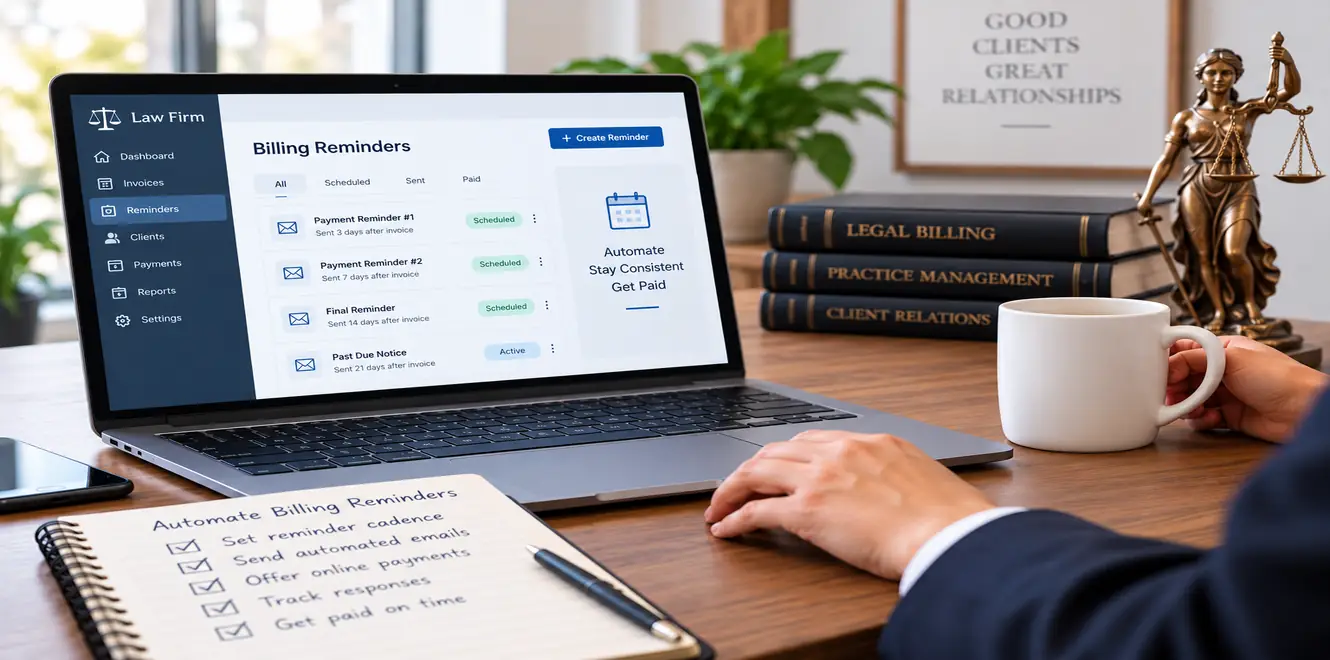
A scheduled payment reminder can keep the invoice visible before and after the due date. The exact cadence will depend on the firm's billing policy, but the process should be consistent enough that overdue accounts don't depend on someone remembering to follow up.
A typical sequence may include a courtesy reminder shortly before the due date, a notice when the invoice becomes overdue, and additional follow-up at set intervals.
Each message should identify the invoice, amount due, payment deadline, and available payment methods. It should also tell the client how to raise a billing question.
Late payments often come from routine administrative problems rather than deliberate refusal to pay. Common causes include:
- The invoice went to the wrong person.
- The client's accounts-payable team needs a purchase order.
- A charge needs clarification.
- Contact details have changed.
- The client has a temporary cash flow problem.
- Payment was made but hasn't been matched to the invoice.
Those situations need different responses. Sending the same reminder repeatedly won't solve an unresolved dispute or missing approval.
When a client raises a billing question, take the invoice out of the normal reminder sequence if appropriate and deal with the issue directly. Once it's resolved, update the account and restart follow-up based on the revised payment commitment.
InvoiceSherpa can automate reminder schedules so staff don't have to track every due date manually. Routine accounts can continue through the normal workflow while staff focus on exceptions.
That split matters for law firms. A standard overdue invoice may need another reminder. A disputed bill, broken payment promise, or sensitive client relationship may require a phone call from the right person.
Handle Client Non-Payment With a Defined Escalation Process
Client non-payment needs a clear response, but escalation shouldn't start with threats.
Begin by checking the account. Confirm the invoice was delivered, the charges are correct, the payment terms are clear, and there isn't an unresolved administrative issue. Review previous correspondence and any promises to pay.
A direct phone call can often resolve the problem faster than another email. The client may be waiting for revised documentation, dealing with a changed accounts-payable contact, or trying to resolve a short-term cash issue.
If payment still doesn't arrive, use a defined payment procedure:
- Verify the account details. Review the invoice, engagement terms, due date, billing contact, and previous communication.
- Contact the client directly. Ask whether a dispute or administrative issue is holding up payment.
- Request a firm payment date. Record the commitment so later follow-up refers to something specific.
- Put revised arrangements in writing. If the client needs installments or a short extension, document the dates and amounts.
- Limit further credit where appropriate. Consider deposits, reduced credit limits, or a pause on additional work, subject to professional obligations.
- Escalate unresolved debt. If internal collection efforts fail, consider the appropriate debt recovery route.
Keep notes of calls, disputes, revised payment arrangements, and missed promises. Good records prevent duplicated conversations and make later collection work easier.
Recovery costs should also factor into the decision. Staff time, financing pressure, collection agency charges, and legal fees can quickly change the economics of pursuing a small debt.
Firms should also be careful with interest, late fees, paused work, and external collections. Apply only charges that were properly agreed and permitted. Requirements for notices, debt collection, confidentiality, and professional conduct can vary by jurisdiction.
Non-paying clients don't all need the same response. A long-standing client with a reliable history may justify a short written extension. A newer client who repeatedly misses payment dates may need tighter credit terms before further work begins.
Use Accounts Receivable Automation to Keep Collections Moving
Manual collections become harder to control as invoice volume increases.
Someone has to check aged receivables, decide which accounts need contact, send messages, record replies, track promises to pay, and update the account when money arrives. If the firm is busy, those tasks can slip behind client work.
Accounts receivable automation makes the repetitive parts easier to run on schedule.
InvoiceSherpa can support automated reminders, payment workflows, receivables tracking, and online payment options while working alongside supported accounting platforms. Instead of relying on spreadsheets or calendar alerts, the firm can create a repeatable workflow for routine follow-up.
Different clients can still receive different treatment. A monthly retainer doesn't need to follow the same reminder cadence as a one-time matter or a high-value corporate engagement.
The firm can also use payment history to adjust its process. Look for patterns such as repeated late payment, frequent disputes, clients who pay immediately after a reminder, or accounts that regularly miss promised dates.
Those patterns often point to practical changes.
If invoices are frequently disputed, billing descriptions may need to be clearer. If corporate clients keep saying they never received the bill, the accounts-payable contact may be wrong. If clients reliably pay after the first reminder, sending that reminder earlier may shorten the payment cycle.
Automation also makes it easier to separate routine collection activity from accounts that need personal attention. Staff can spend less time sending standard reminders and more time resolving the situations that can't be automated.
Build a Billing Process That Gets Invoices Paid Faster
A better collections process starts before an invoice becomes overdue.
Set payment terms during onboarding. Send accurate invoices without delay. Give clients straightforward payment options. Use scheduled reminders. Record disputes and payment promises. Escalate overdue accounts through a documented process rather than making each decision from scratch.
InvoiceSherpa can help legal teams automate recurring accounts receivable work while keeping overdue balances visible. That reduces the time spent manually chasing routine invoices and gives staff more room to deal with accounts that require direct attention.
If your firm wants a more consistent way to follow up on invoices, manage receivables, and give clients an easier route to payment, see how InvoiceSherpa can fit into your billing workflow.
September 29, 2026
.webp)


